
A few months ago, we were approached by a client from the BFSI sector with a challenge that is becoming the new "standard" for modern business. They didn’t just want a new website. They were looking for something more ambitious: a way to manage their content from one single place, but have it interact with a dozen different "frontend" points—apps, portals, and web platforms—all at once.
In the industry, we call this an omnichannel approach. In plain language, it means you write your content once, and it flows everywhere your customers are, without you having to copy-paste it into five different systems.
We went looking for a solution that was flexible enough to handle this "one-to-many" relationship without becoming a technical nightmare. That search led us to Strapi. Today, we are proud to announce that INDUSTRIA has officially become a Strapi partner.
The Problem: Content Silos Most companies treat their website, their mobile app, and their customer portal as separate islands. If you change a price or a product description, you have to log into three different dashboards to update it. It’s slow, it’s prone to human error, and frankly, it’s a waste of time.
The Solution: The "Headless" Bridge By adding Strapi to our technology stack, we are solving the omnichannel problem for our clients. Strapi acts as the "central brain." It holds all the content in a clean, structured way, and then uses APIs to "feed" that content to any device or platform the client needs.
This isn't just a technical upgrade; it’s a shift in how businesses talk to their customers. Whether you are in a highly regulated industry like banking or a fast-moving retail environment, the goal is the same: One system for management, infinite points of interaction.

Bridging the gap between rigid backend data and flexible frontend experiences.
What "Headless" Actually Means for Your Business?
You will hear the term "Headless CMS" thrown around a lot. It sounds technical, but the benefit is practical.
In a traditional setup, your content is glued to your website code. If marketing wants to change a layout, IT has to get involved. With Strapi, the content is separated from the website’s underlying code. It sits in a separate, secure hub. This means:
- Your ERP can feed product data directly into the system.
- Your Marketing Team can edit the text and images without breaking the code.
- The Content flows instantly to your mobile app, your website, and your internal dashboards simultaneously.
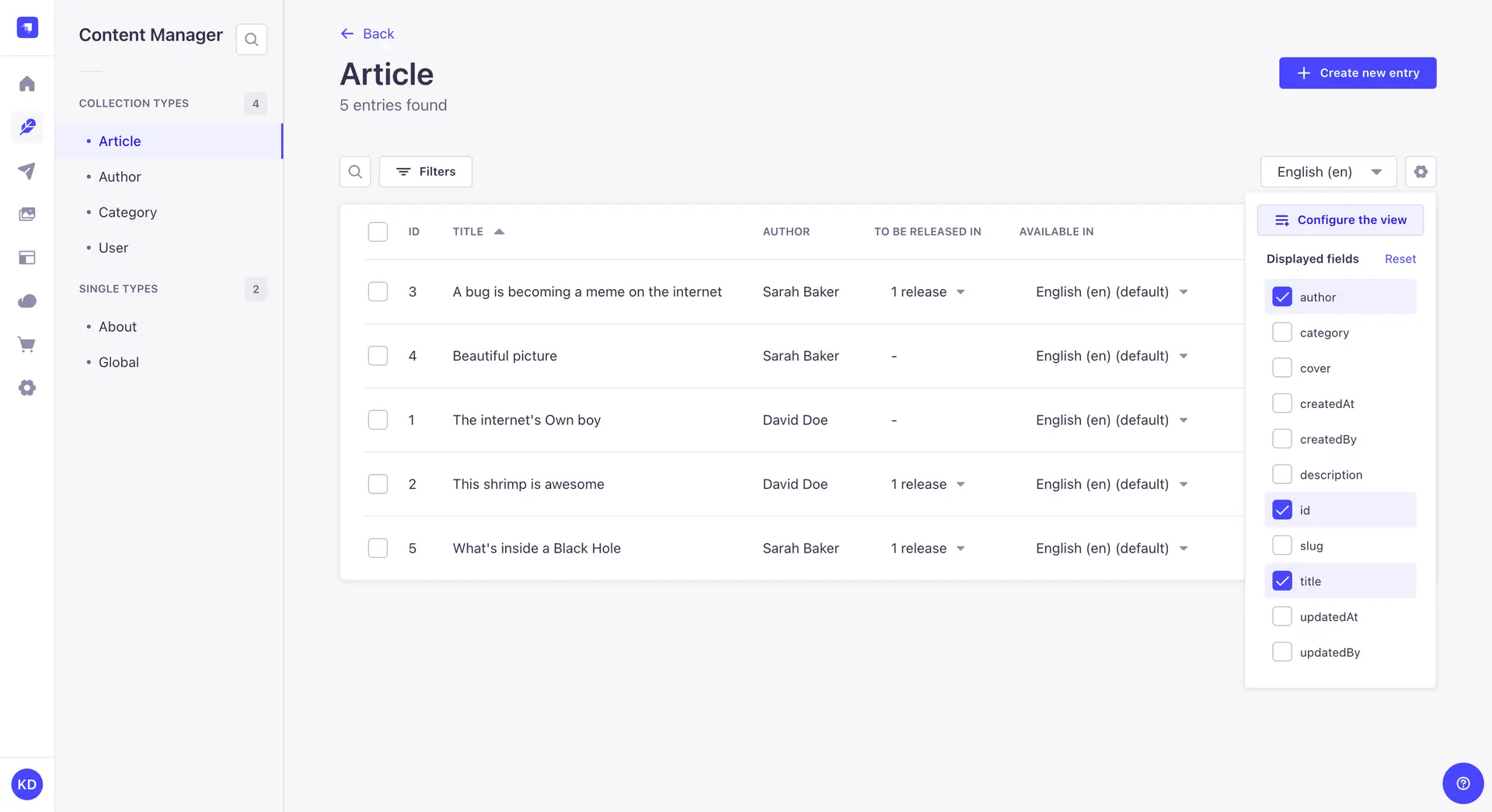
Strapi Interface: Customizing the displayed fields for the Article collection.
A Simple Scenario: The Bank and the Update
Strapi is particularly powerful for our clients in the BFSI (Banking, Financial Services, and Insurance) sector.
Imagine a financial institution that needs to update a critical interest rate or a compliance disclosure. In legacy systems, this might require a developer ticket, a code review, and a server deployment. That is slow and risky.
By combining our integration expertise with Strapi’s structured content models, that same institution can now update the data once. It immediately reflects across their banking app, their public website, and their customer support portal. The data remains secure and audited, but the bottleneck is gone.
Why We Chose This Path?
We didn’t choose to partner with Strapi just to add another logo to our footer. We chose it because it aligns with our philosophy: build solutions that adapt to real business needs, not the other way around.
We are now ready to deploy Strapi for:
- High-traffic corporate websites that need to pull data from ERPs.
- Secure client portals for regulated industries.
- Unified digital ecosystems where content, data, and business processes actually work together.